You’ll get a compact, internally zooming 70–200mm f/2.8 that keeps balance on gimbals and won’t extend in tight spaces, so you can shoot handheld or stabilized without fuss. It’s sharp across the range at f/2.8, with peak edge performance around f/4, and fast, quiet AF for events and portraits. The magnesium-alloy, weather-sealed body feels solid but heavy—use a monopod or dual-strap for long days. Keep scrolling for full specs and sample shots.
Some Key Points
- Internally zooming 70–200mm design keeps lens length constant for gimbal balance and tight-space shooting.
- Consistent f/2.8 sharpness across the range, with excellent center clarity and strong edge performance at f/4.
- Solid, weather-sealed magnesium-alloy build with metal mount offers durability and resistance to dust and light rain.
- Fast, quiet autofocus ideal for tracking subjects; best paired with gimbals or monopods due to heavier weight.
- Great for portraits and events (70–135mm for portraits, 135–200mm for eye-focused telephoto work), but close-focus is limited.
Internally Zooming L-Series Telephoto
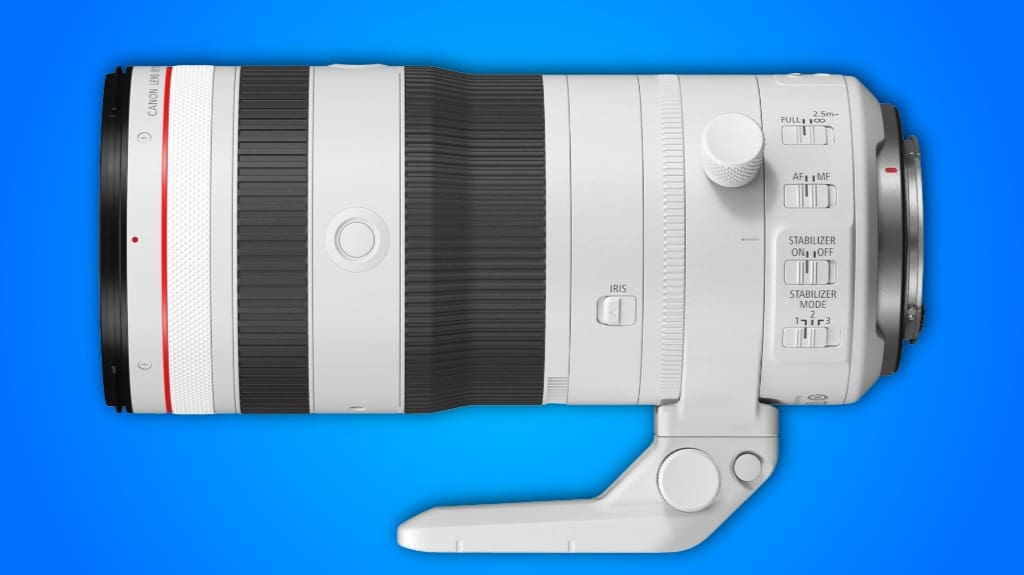
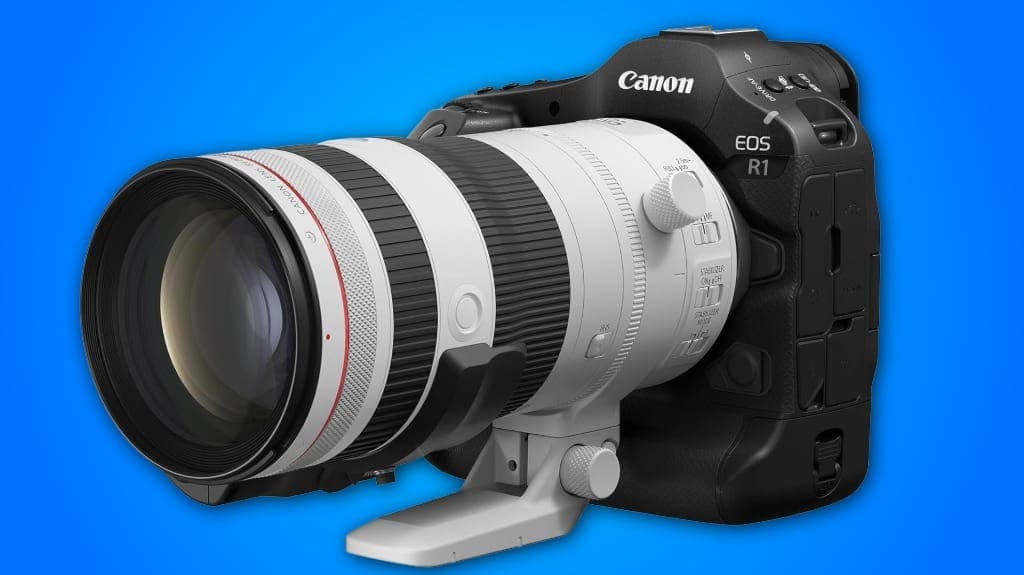
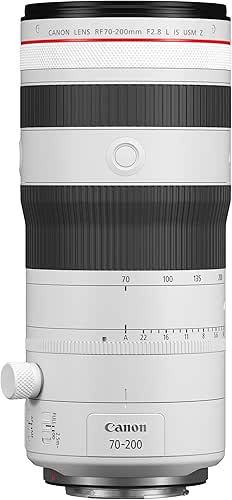
One of the standout things about the Canon RF70-200mm F2.8 L is that it’s internally zooming, which keeps the lens length constant as you change focal length—so you won’t have a barrel extending into tight spaces or a shifting balance on your gimbal. You’ll appreciate the clean zoom mechanism for run-and-gun shoots, tight interiors, and stabilised video, since nothing protrudes to snag or unbalance. For lens versatility, use 70–135mm handheld for portraits, then lock focus and pad the zoom for smooth 200mm reach on a tripod. That workflow reduces gear swaps, keeps framing consistent, and speeds your shoot.
Consistent F/2.8 Sharpness
Sharpness at f/2.8 matters because that’s the aperture you’ll use most when you need background separation without sacrificing speed, and this lens delivers it across the zoom range better than many rivals. You’ll notice sharpness consistency from 70mm to 200mm, with center files razor‑clear and edges holding up well, especially when you stop to f/4 for critical crops. For portraits, frame tight at 135–200mm and keep focus on the eye; for events, use 70–120mm to capture groups while preserving subject isolation. This improves image quality for prints and client deliveries, while keeping processing minimal and predictable.

Build and Finish Quality
You’ll notice the RF70‑200mm F2.8 L feels substantial the moment you pick it up, with a solid, balanced heft that reassures you it’s built for heavy use; the white weather‑sealed barrel resists heat and keeps the lens discreet in bright conditions, and the metal mount locks snugly to your camera so there’s no wobble when you shoot. You’ll appreciate the ergonomic design: controls sit where your hand naturally falls, zoom and focus rings turn smoothly, and the iris ring clicks predictably for video work. The finish mixes functional robustness with refined aesthetic appeal, so it looks pro while handling real field demands.
Magnesium-Alloy Weather Sealing
Having a solid build matters in the field, and the RF70‑200mm’s magnesium‑alloy weather sealing backs up that heft with real protection. You’ll appreciate the sealed mounts and gaskets around switches, which keep dust and light rain from intruding during long shoots. For outdoor photography, wipe seals after salt or mud exposure and cycle the zoom and focus to clear trapped grit. The alloy body resists dings while staying lighter than steel, so you can handhold longer. Don’t assume waterproof—use a rain cover in heavy storms—but expect reliable weather resistance for landscape, event, and travel work.
Pros & Cons
While it’s not perfect, the RF70‑200mm F2.8 L delivers a lot you can use every shoot, day in and day out. You’ll get superb image quality, with sharp center-to-edge resolution and reliable color, ideal for portraits and events. Autofocus performance is fast and quiet, so you can track moving subjects and grab decisive moments without distraction. On the downside, it’s heavy for long handheld sessions, and close-focus reach is limited compared with primes. If you need lighter kit, pair it with a gimbal or monopod. For demanding work, trust this lens and plan stabilization.
Carry With Dual-Strap System
If you plan to carry the RF70‑200mm F2.8 L for a full day, use a dual‑strap system to distribute the weight and keep the lens ready without hogging your shoulders. You'll clip one strap to the camera and one to the lens foot, or use a Y‑connector that balances them across your torso. This setup gives dual strap benefits: reduced neck strain, faster shoulder-to-eye shifts, and steady support when crouching. Choose wide, padded straps and quick‑release clips, adjust tension so the lens sits at hip height, and practice switching hands. The result: improved lens portability, longer shoots, and quicker framing.

Does It Include Image Stabilization (IS)?
No, it doesn't have in-lens image stabilization (IS), so you'll rely on a camera body with IBIS or faster shutter speeds to keep shots sharp. For better image quality in low light, use IS-equipped RF bodies, push ISO carefully, and open to f/2.8 for subject isolation. If you record video, enable body stabilization or a gimbal, and consider the Power Zoom adapter for smooth pans when you need steadier motion.
Is It Compatible With Teleconverters?
Yes, you can use Canon RF teleconverters with this lens, but expect changes in teleconverter performance and lens versatility. A 1.4x keeps autofocus speed and yields 98–140mm-equivalent reach, with minimal light loss; a 2x cuts light two stops and may slow AF or reduce accuracy in low light. Test your combos for focus speed, confirm compatibility with your camera body, and prefer 1.4x for balanced sharpness and reliable AF.
What Filters Fit the Front Element?
The front element takes 77mm filters. You’ll want multi-coated UV or clear filters for lens protection, and circular polarizers or ND screw‑on filters for creative control. Use slim, low‑profile filter rings to avoid vignetting at 70mm, and step‑up rings if you already own larger filters. When shooting video, consider magnetic or quick‑change holders for faster swaps. Keep filters clean, and store a spare in your kit.
Can It Autofocus With Older Canon Bodies?
Yes — you can autofocus with older Canon bodies, but lens compatibility depends on mount and adapter. If your camera has an RF mount, autofocus performance is native and excellent. If you use an EF-mount DSLR, you’ll need Canon’s EF‑RF adapter; autofocus works, though speed and advanced features may be limited by the body’s AF system. Test focus tracking in your shooting modes, and update firmware on both camera and adapter for best results.
Is There a Tripod Collar Included?
Yes — it ships with a tripod collar, so you get immediate tripod stability for longer shoots. Check the collar materials: Canon uses metal alloy for the foot and a durable composite for the clamp, giving strength without excess weight. Lock the foot to your ball head, align the lens balance point, and tighten the collar knob firmly. If you want added rigidity, use an L‑bracket or a quick‑release clamp rated for the lens weight.