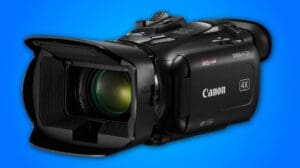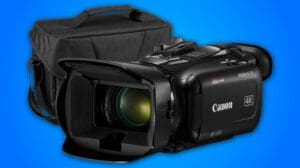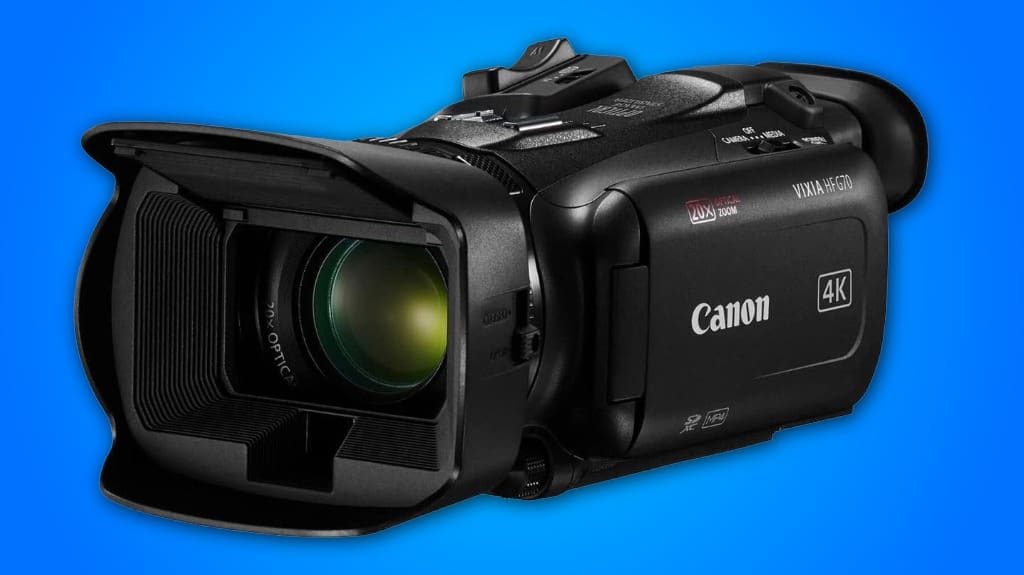
The Canon VIXIA HF G70 gives you sharp 4K from a 1/2.3″ sensor and a useful 20x optical zoom, so you can shoot events and run-and-gun projects confidently. Use low ISO and flat picture to keep detail, brace the cam or use a monopod at long zooms, and pack spare batteries and an ND filter for bright outdoors. Colors are natural with controlled white balance, and the mag‑alloy body feels solid. Keep going and you’ll find practical tips and limits.
Some Key Points
- 1/2.3″ 4K UHD CMOS sensor delivers sharp daylight and controlled-indoor footage but shows limited low-light performance.
- 20x optical zoom offers strong reach with minimal quality loss, though long focal lengths need stabilization.
- Image stabilization plus magnesium-alloy chassis provide stable, durable handheld shooting and predictable ergonomics.
- Conservative ISO and flat picture mode yield best image quality; bracket exposures and use reference cards in high contrast.
- Lightweight build is comfortable for long shoots, but battery life is short for extended recording sessions.
K UHD Sensor Summary
Sensor-wise, the VIXIA HF G70 uses a 1/2.3″ 4K UHD CMOS that delivers sharp, usable footage you can rely on. You’ll notice strong sensor performance in daylight and controlled indoor settings, so expose carefully to keep highlights. Use ISO conservatively to preserve image clarity, and bracket exposures when contrast is high. Pair the camera with fast glass or a tripod for low light; that reduces noise and keeps texture. For crisp footage, shoot in flat picture mode, then apply modest sharpening in post. Monitor histograms, lock exposure for sequences, and test settings before important shoots.
0x Optical Zoom Handling
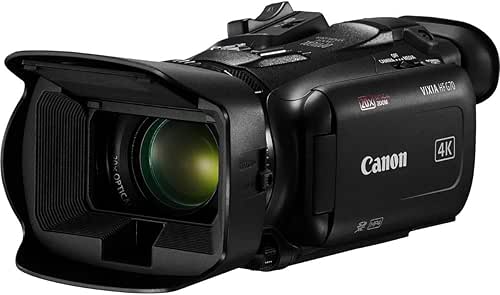
You’ll get the most from the G70’s 20x optical zoom when you balance reach with image quality, since longer focal lengths amplify camera movement and any sensor noise you fought in low light. When you zoom in, brace the camcorder or use a monopod to keep frames steady, and ease zoom speed to avoid hunting. Test zoom performance at several distances, noting when focus accuracy slips; switch to adjustable focusing speeds or engage Hybrid AF with face detection for moving subjects. For critical shots, step closer rather than pushing digital range. Record sample clips, review sharpness, then refine technique.
Color Reproduction Accuracy
Color accuracy matters because it’s what makes skin tones, foliage, and skies look believable on screen, and the G70 gives you a lot to work with. You’ll find built‑in color profiles that deliver natural hues straight away, and they’re easy to switch while shooting. For bolder looks, pick a flatter profile, expose cleanly, and use controlled white balance, then apply precise color grading in post. Try small adjustments: lift mids for skin warmth, lower greens to curb oversaturation, and push blues slightly for richer skies. Keep a reference card on set, shoot in consistent light, and monitor with false color.
Magnesium-Alloy Chassis Resilience
Good color holds up better when the camera itself is built to handle real-world use, and the G70’s magnesium-alloy chassis gives you that backing. You get solid build quality that resists bumps and stays rigid during handheld pans, so sensors and lenses stay aligned. The lightweight design keeps the camcorder easy to shoulder for long shoots, reducing fatigue. Carry it in a sling bag, brace your elbow, and you’ll notice steadier framing. For field work, wipe exposed seams, check fasteners regularly, and avoid prolonged rain—magnesium is durable, but seals need care. It’s practical engineering, ready for active use.
Pros & Cons
While the G70 packs some real strengths, it also has trade-offs you should weigh before buying. You get excellent build quality, a solid magnesium-alloy feel, and predictable ergonomics that survive field use. Image stabilization and powerful zoom reveal creative shots, and the user interface is clear enough to learn fast. On the downside, low‑light performance is limited by the small sensor, so expect noise in dim scenes; battery life can be short during long shoots. If you prioritize mobility and clean controls, this is a smart tool. If ultimate low‑light image quality matters, consider other options.
Add ND Filter Attachment
If you plan to shoot outdoors or want shallower depth of field in bright light, add an ND filter attachment to the G70 to control exposure without forcing you to crank shutter speed or close the aperture. You’ll gain ND filter benefits like maintaining cinematic aperture and natural motion blur while avoiding blown highlights. Choose filter attachment options that match the G70’s lens—threaded adapters or magnetic mount rings work well. Buy a variable ND (ND2–ND32) for flexibility, or fixed stops for color neutrality. Attach securely, check for vignetting at wide zoom, and test white balance after mounting to keep color accurate.

Does It Support External Microphones or XLR Inputs?
No, it doesn’t include XLR inputs, but you can still boost microphone compatibility and audio quality. Use the camcorder’s 3.5mm mic jack with a high-quality shotgun mic, or attach an XLR-to-3.5mm adapter or compact XLR preamp like the Beachtek or JuicedLink, which give phantom power and cleaner gain. Monitor levels with headphones, set manual gain to avoid clipping, and record a backup audio track on a separate recorder for best results.
Can It Record Internal Audio in 4-Channel WAV?
No, it doesn’t record internal audio as 4-channel WAV. You’ll get stereo internal recordings, so for richer multi-channel audio recording you’ll need an external recorder or mixer, synced later, or use a field recorder with 4-channel WAV output. That approach improves audio recording and sound quality, lets you capture separate mics for clarity, and gives you isolated tracks for post—label them, sync to camera timecode or clap, and mix in your editor.
What Battery Life Can I Expect During Continuous 4K Recording?
You’ll get roughly 1.5 to 2 hours of continuous 4K recording on a single standard battery, though battery performance varies with settings and temperature. For longer recording duration, carry two charged spares or use an external USB-C power bank or AC adapter, which extends runtime substantially. Turn off Wi‑Fi and lower screen brightness to conserve power, and swap batteries during breaks to avoid missing critical shots.
Is There Wi‑Fi or Bluetooth Remote Control Functionality?
No, it doesn’t offer built‑in Wi Fi connectivity or Bluetooth pairing for remote control, so you can’t use Canon’s mobile app directly. You can still control it remotely: attach a compatible wireless remote or an external recorder that supports UVC livestreaming over USB, or use a third‑party HDMI/SDI wireless transmitter with a handheld controller. For tethered control, connect to a Mac/PC via UVC and use desktop software to manage settings and start/stop.
Can the Camera Charge via USB-C While Recording?
Yes, you can use USB C charging while recording, but check limits: the camera accepts USB C charging to maintain power during long shoots, and it won’t interrupt recording. Use a quality PD power bank or USB‑C charger rated for stable output, connect directly, and avoid hubs. If you need continuous unattended operation, also consider a dummy battery with AC adapter for guaranteed, consistent power and fewer disconnections while recording.